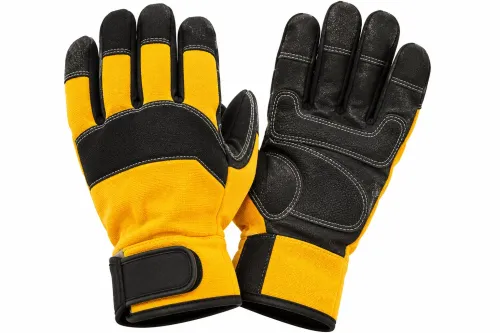
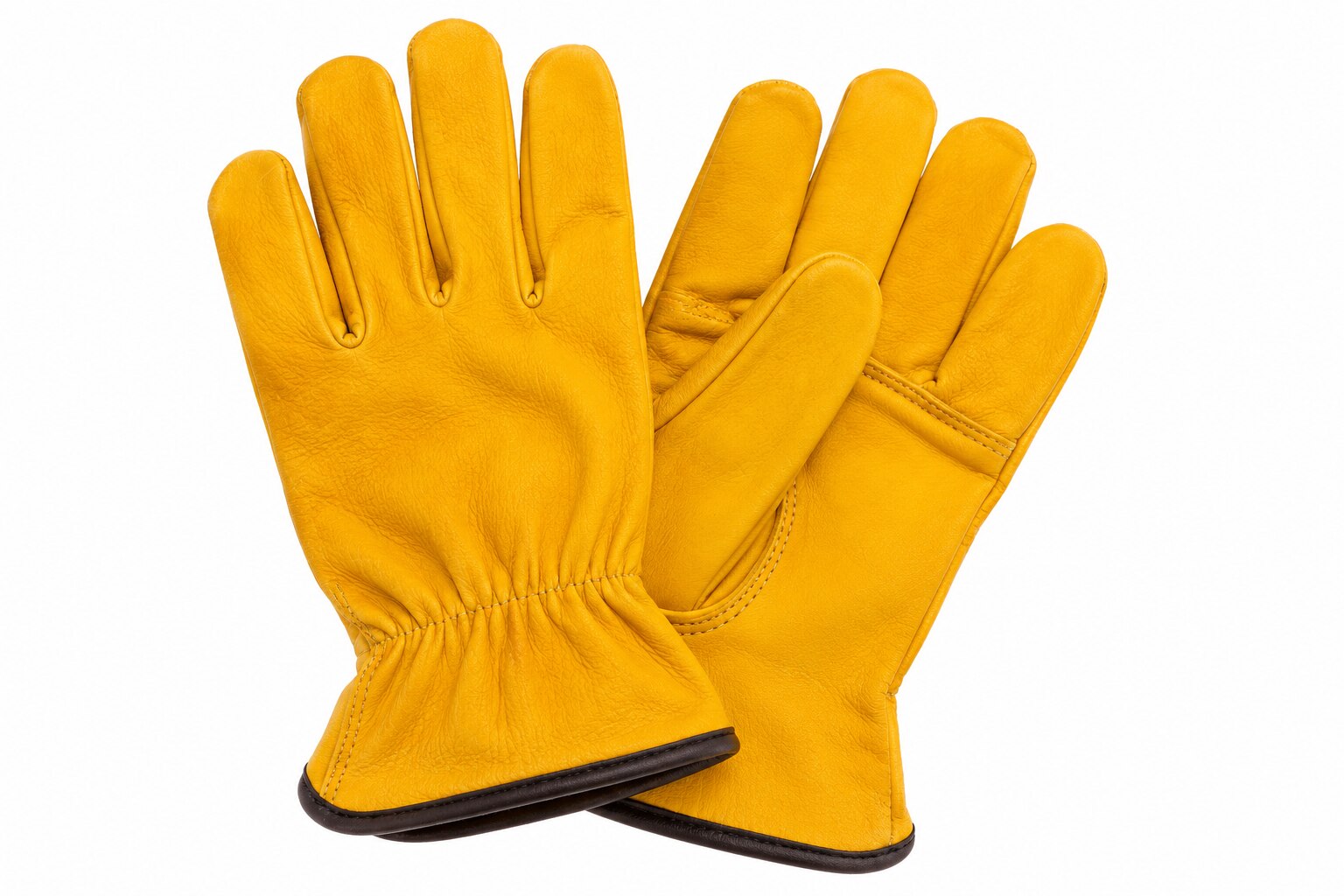
Yellow leather gloves can support routine mechanical tasks on a cold, isolated fire-protection system, but colour and a fire-safety claim do not establish protection against heat, flames, chemicals or electricity. You will be able to match the glove to the task, verify its markings and reject it when the work exceeds its tested limits.
Key takeaways
- Use leather gloves only after isolation, depressurisation and cooling.
- Do not treat ordinary leather gloves as electrical-insulating gloves.
- Check size, leather construction, seams, cuffs, markings and batch traceability.
- Demand documented specifications and replacement support from your Nagpur supplier.
When are yellow leather gloves suitable for routine system work?
Yellow leather gloves are suitable for routine fire-protection system work when the system is shut down, depressurised and cool, and the dominant hazards are mechanical.
Before work begins:
- Isolate the fire pump and lock out relevant electrical, hydraulic or pneumatic energy sources.
- Depressurise the pipework, hydrant lines and hose-reel connections.
- Confirm that recently discharged extinguishers, valves, pipework and nearby surfaces are cool.
The gloves are practical for handling threaded steel pipe, brackets, hydrant valves, hose-reel fittings, extinguisher hardware, valve bodies and sheet-metal edges. Leather helps resist abrasion, dirt, minor cuts, sparks and brief incidental heat, provided the delivered glove has documented mechanical performance.
Yellow leather gloves for fire protection system work in Nagpur are not automatically firefighting, hot-work or electrical gloves. A yellow colour and the phrase “fire-resistant” do not prove a temperature rating, flame test or safe contact time. EN 388 mechanical performance does not establish protection against contact heat, radiant heat or flame.
Use the glove only after matching its construction and tested performance to the task assessment. Choose a different glove and control method for active firefighting, welding, grinding, sustained heat, direct flame or work on energised alarm panels, pump starters or controllers.
Which hazards must the glove handle during installation and servicing?
A cold, isolated system still exposes hands to cut pipe, threaded fittings, burrs, brackets and hose couplings. Valve handwheels, pump guards and access covers create pinch points; dropped tools cause impact, while pipe supports abrade leather. Water, oil or dirt can remove grip just when you need to control a valve or coupling.
Assess the glove against cuts, lacerations, punctures, abrasion, thermal burns, chemical burns, skin absorption and harmful temperature extremes. The phrase yellow leather hand gloves in nagpur identifies a colour and location, not a protection class.
| Condition | Main hand hazard | Required decision |
|---|---|---|
| Cold, isolated pipework | Edges, threads, pinch points and abrasion | Use a fitted glove with documented mechanical protection |
| Hot pipework or recently discharged extinguisher | Contact heat and burns | Verify tested thermal performance and safe exposure time |
| Smoke, fire or radiant heat | Flame, radiant heat and extreme temperature | Use firefighting or heat-specific controls, not a routine leather glove |
Sustained heat, direct flame, molten-metal splash, aggressive chemicals and saturated wet handling require a different glove design or another control. A wet leather glove can stiffen, lose grip and retain contamination; chemicals can also pass through or be absorbed by the skin.
Thicker or stiffer leather improves some cut, puncture and impact protection but reduces dexterity. It can obstruct small alarm-panel terminals, test buttons, extinguisher pins and hose-coupling work, so trial the actual tasks before issuing gloves. A generic industrial glove cannot cover every hazard.
What construction and markings prove what the gloves can do?
Verify the delivered glove’s construction and label, not its yellow colour or catalogue description. Identify the hide, such as cowhide, and record whether it is split or grain leather, the leather thickness, lining, cuff length, stitching and reinforcement at the palm, fingertips and knuckles.
Use this purchase checklist:
- Confirm an EN 388 marking with tested levels for abrasion, cut, tear and puncture. Record the newer cut-test result, shown as an A–F level, and the impact symbol P when present.
- Treat EN 388 as mechanical protection only. It does not establish contact heat, radiant heat, convective heat, flame or molten-metal protection.
- For thermal exposure, require EN 407 with the actual performance levels for the tested heat hazards. Match those results to the heat source and expected exposure duration; EN 407 does not make the glove fireproof.
- Check the manufacturer name, exact model, size, standard pictograms, batch or lot code and date or other traceability information.
- Request any Indian Standard marking and the conformity document or test report supplied for that model.
A buyer searching for fire protection system gloves in nagpur should reject a specification that says only “industrial leather” or “fire-resistant.” Confirm that the documented rating belongs to the delivered model and batch, then compare the cuff, dexterity and reinforcement with the task.
A good EN 388 result cannot justify using the glove near flames or sustained heat.
How should you choose gloves for wet, electrical and hot-work conditions?
Issue task-specific gloves when water, electricity or hot work defeats ordinary leather. Sprinkler testing, hydrant operation, pump-room leaks and washdown saturate leather, reduce grip, damage the hide and increase electrical-conductivity concerns. Make a coated or waterproof design the standard where wet handling is routine.
| Condition | Issue | Control |
|---|---|---|
| Wet handling | Coated or waterproof gloves | Replace gloves when coating splits or grip is lost |
| Electrical work | Voltage-rated insulating gloves selected for the circuit | Inspect before use, check for cuts, holes, contamination and damage, and complete the documented electrical test at the interval required by the manufacturer, IEC 60903 or local rules |
| Hot work | Gloves rated for the task and heat exposure | Authorize the work, remove or shield combustibles, provide a fire watch and monitor after completion |
Ordinary leather gloves are not electrical insulating PPE. For alarm panels, pump starters, controllers and emergency-power equipment, use voltage-rated insulating gloves for the circuit; a leather outer protector can prevent mechanical damage but cannot replace the insulating glove.
Welding, brazing, grinding and cutting require hot-work authorization, combustible removal or shielding, a fire watch and post-work monitoring in addition to task-appropriate gloves. Yellow leather alone does not control ignition or molten-metal hazards.
Run a fit trial before issue. Oversized gloves can catch on handwheels, ladders and rotating equipment; stiff gloves reduce dexterity at terminals, test buttons and hose couplings. Whether sourcing fire protection system gloves in Nagpur or comparing yellow leather gloves for fire protection system work in Nagpur, test the actual glove on the actual task.
What should a Nagpur workplace require from its glove supplier?
A procurement brief should define the glove you will receive, not repeat a catalogue claim.
Require the exact delivered model, hide and construction, lining, cuff, size range, intended hazards, EN 388 or equivalent mechanical rating, EN 407 rating where thermal exposure exists, applicable Indian or international standard, test report or declaration, model and batch identification, care instructions and replacement criteria.
1. Ask an industrial leather gloves supplier in Nagpur to provide conformity documents that match the model and batch supplied. A product photograph or the search description “yellow leather hand gloves in Nagpur” proves neither mechanical performance nor heat protection.
2. Obtain samples before ordering the full quantity. Trial them on valve handwheels, hose couplings, extinguisher pins and alarm-panel tasks; reject a size or construction that catches, slips or blocks the required movement.
3. Record the issued size and model against each work team, then give users the care instructions. Keep leather dry, ventilated and away from contamination; do not share contaminated pairs. Rahul Trading can help source industrial PPE locally, but verify the delivered glove independently.
4. Reject or replace gloves with holes, split seams, exposed lining, hard contamination, lost grip, severe wet damage or heat damage. Replace them immediately after any event that compromises the leather, stitching or fit.
Related product
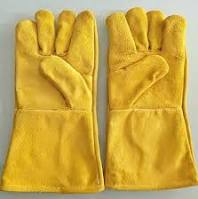 | Yellow Leather Hand Gloves Usage/Application Fire Safety Color Yellow Size All Sizes Gender Men Type Full Finger Leather Type Faux Leather, Pure Leather Material : Leather High... View product → |
Frequently asked questions
When are yellow leather gloves suitable for fire-protection system work?
Use them for routine work on an isolated, depressurised and cool system when mechanical hazards such as abrasion, dirt, sharp edges and minor impact dominate.
Can yellow leather gloves protect against electrical hazards?
No. Ordinary leather gloves are not electrical-insulating gloves. Use gloves with the required electrical class and test evidence, and follow the site electrical safety procedure.
Are yellow leather gloves suitable for wet work?
Only when the glove specification covers the expected water, chemical and contamination exposure. Wet leather loses comfort and grip, so use a coated or waterproof glove when the task requires it.
What gloves are needed for hot work on a fire-protection system?
Use gloves specified for the heat, sparks and molten-metal exposure involved. Ordinary yellow leather handling gloves are not proof of welding or high-temperature protection.
What should a Nagpur workplace ask from a glove supplier?
Ask for the glove material and size range, declared standards, test or conformity documents, batch details, care instructions, replacement terms and samples for a site trial.
Keywords