A model number, knitted liner and full-finger shape do not tell you whether a glove will survive your task or protect against its main hazard. By the end, you will know which test markings, fit checks, trial results and delivery records to require before approving Stronghand 0613 or comparing it with another work glove.
Key takeaways
- Match the glove’s complete test marking to your specific workplace hazard.
- Compare abrasion, cut, tear and puncture results—not the phrase “cut resistant.”
- Trial several sizes with the exact tools and materials workers handle.
- Record batch details and inspect repeat orders before distribution.
What workplace hazards can Stronghand 0613 control?
Stronghand 0613 can control abrasion, handling friction, and cuts only when its complete test marking matches your task. A product label saying “cut resistant” is not enough, especially with glass fibre, steel or other blade-dulling yarns that can distort the older coupe-cut result.
Before approval, obtain:
- The full EN 388:2016+A1:2018 code: abrasion, coupe cut, tear and puncture, plus the ISO 13997 cut level from A to F when applicable and the optional impact-pass mark.
- The foam coating’s material, palm and fingertip coverage, thickness and grip pattern, with trial results on dry, wet, oily and dusty surfaces.
- The technical datasheet or test report identifying the exact model revision, size, intended use and batch traceability.
An EN 388 mechanical-risk marking does not establish protection against heat, flame, chemicals, needles or electrical contact. It also does not establish impact protection unless the optional impact mark is present; that mark does not replace a task-specific assessment.
For thermal work, require EN 407 results for the hazard involved: contact heat, flame, convective heat, radiant heat, and small or large molten-metal splashes. EN 407 is not a blanket “fireproof” claim.
Do not select this glove for rotating machinery, sharp-edge cutting, chemical handling, high-temperature work or disposable contamination control without separate controls. Use guarding, safe handling procedures and a documented risk assessment. Searches for Stronghand working gloves safety hand gloves in Nagpur still require hazard-specific evidence.
How should you compare the 0613 with other work gloves?
Choose the construction that matches the failure you need to prevent, not the lowest purchase price. The foam finish on Stronghand 0613 is unconfirmed until the technical datasheet identifies its material, coverage, thickness and grip pattern.
| Option | Main trade-offs |
|---|---|
| 0613, finish unconfirmed | Dexterity and breathability cannot be judged; dry, oily and dusty grip, abrasion life and puncture resistance require evidence. Cost per use is unknown. |
| PU-coated knitted | Excellent dexterity, breathability and dry grip; limited oily-surface grip, puncture resistance and abrasion life. Usually low cost per use. |
| Nitrile-foam | Better oily grip and abrasion life than PU; less breathable and sometimes less precise for fine handling. Cost is moderate. |
| Leather | Strong abrasion and puncture resistance; poorer dexterity, breathability and contamination control. Higher cost per use when cleaning or replacement is difficult. |
| Cotton knitted | Breathable and inexpensive; weak against oil, abrasion, puncture and contamination. Cost rises through rapid replacement. |
| Disposable | Best contamination control and low initial price; poor abrasion, puncture and mechanical durability. Cost per use becomes high when changed repeatedly. |
For the stronghand 0613 gloves in Nagpur, request the datasheet, printed glove marking, certificate or declaration of conformity, and test-report reference. Treat a product claim as unverified until those documents identify test levels.
Do not infer chemical resistance from nitrile, PVC, latex or neoprene. Request permeation data for the exact chemical, concentration, temperature and exposure time, including breakthrough and degradation.
Leather welding gloves do not prove electrical insulation or arc-flash compliance. Compare failure rates over a defined shift or number of uses, including rejected pairs, rather than comparing purchase prices alone.
How do you size, fit and trial full-finger work gloves?
Measure the wearer, not the clothing size. For full finger work gloves in Nagpur, measure hand circumference around the knuckles and hand length from the wrist crease to the middle-finger tip, then use the manufacturer’s complete size chart. Do not assume Medium fits every worker.
1. Obtain samples in every proposed size. A loose glove reduces dexterity and can catch on rotating equipment; an undersized glove increases fatigue, seam stress and early failure.
2. Check the 7-inch cuff during real movements. It must cover the wrist, overlap the sleeve without creating a machinery snag point, and leave no exposed gap when the wearer opens doors or handles materials.
3. Assign each sample to its intended assembly, warehouse, packaging, material-handling, construction or machine task. Record grip on the actual surface, fingertip control, touchscreen needs, seam comfort, sweat, lint shedding and damage after each shift.
4. Compare results across workers before approving the size mix. Nagpur’s heat makes sweat, liner weight, breathable backs and cuff comfort important for sustained wear, but ventilation must not reduce required coverage.
Stop using and reassess any glove used near rotating equipment if it snags, bunches, stretches or interferes with the task. A glove that feels comfortable at the fitting table can still fail through poor grip, restricted finger movement or heat-driven non-compliance. Keep the trial record with the approved sample and size decision.
How should you wash, inspect, store and replace the gloves?
Before approving repeated wear, confirm that the exact glove model is washable, reusable, touchscreen-compatible, breathable and resistant to shrinkage. Do not infer these properties from a nylon-Lycra liner or foam construction.
Follow the care label, not a generic glove-washing routine. Record its washing temperature, detergent limits, drying method and maximum drying temperature; excessive heat can shrink the glove, harden its coating or reduce grip.
Remove gloves from service when oil or chemicals have entered the liner. Obtain replacement guidance for the specific chemical, concentration and exposure; washing contamination back into the fabric can spread the hazard and leave residues against the skin.
Reject any glove showing:
- A cut, exposed yarn or separated seam
- Hardened or cracked coating
- A stretched cuff or contaminated liner
- Loss of grip, shrinkage or reduced flexibility
Inspect gloves before each shift and after washing. A glove that looks intact can still become unsafe when its coating no longer grips or its fibres have tightened.
Store unused stock away from direct sunlight, moisture, excessive heat, ozone, oils and chemicals. Retain the batch or lot number with the delivery record so you can trace defects or inconsistent wear.
Ask the purchase file to state the manufacturer’s shelf life, storage conditions and expected replacement consumption per worker or shift. Those figures help you plan stock and identify a glove that costs more through early replacement than its purchase price suggests.
What should a Nagpur buyer check before placing a repeat order?
Before approving recurring supply, make the delivered glove match the approved sample, not merely the brand name. A listing for stronghand 0613 gloves in Nagpur is incomplete without the revision, material, size range, application, standard and traceability details.
1. Build the approval file. Record the exact Stronghand 0613 model and revision, worker sizes, cuff style, printed markings, coating description, packaging, manufacturing information, country of manufacture and batch or lot number. Attach the purchase order, technical datasheet and approved sample.
2. Inspect every delivery against that file. Check model marking, size, pair count, cuff, coating, packaging and lot details before distribution. Reject a visually similar substitute or any shipment that differs from the purchase order or approved sample.
3. Run a controlled sample test before bulk buying. Use measured workers and intended tasks to confirm size mix, grip and handling, then set minimum and maximum stock levels, expected replacement consumption and the supplier’s confirmed lead time.
A useful safety hand gloves supplier in Nagpur helps select samples, confirm sizes, check specifications, maintain recurring supply and resolve delivered-stock differences. Rahul Trading can support those procurement checks; that service does not prove the glove’s performance.
Use this buyer checklist when searching:
- stronghand working gloves safety hand gloves in Nagpur: model, revision, sample and test records
- stronghand 0613 gloves in Nagpur: size, pair count, lot and delivery controls
- safety hand gloves supplier in Nagpur: lead time, stock levels and after-sales resolution
- full finger work gloves in Nagpur: measured size mix and task-based sample testing
Related product
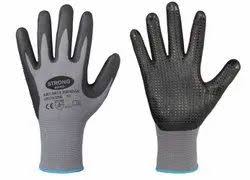 | Stronghand 0613 Handan Working Gloves Stronghand 0613 Handan Working Gloves Size Medium Finger Type Full Fingered Cuff Length 7 inch Color Black And Grey Brand Stronghand Material 90% Nylon, 10% Lycra Country of Origin Made... View product → |
Frequently asked questions
What workplace hazards can Stronghand 0613 control?
Stronghand 0613 can control abrasion, handling friction and cuts only when its complete test marking matches the task. Check the label and technical documentation, especially when glass fibre, steel or other blade-dulling yarns could affect the older coupe-cut result.
How should you compare the 0613 with other work gloves?
Compare the stated abrasion, cut, tear and puncture test results, coating, dexterity, cuff design and usable life. Do not choose from the words “cut resistant” alone; match the documented performance to your materials, tools and handling motions.
How do you size, fit and trial full-finger work gloves?
Measure the hand, use the manufacturer’s size chart, then trial each size during the real job. Check fingertip clearance, palm fit, wrist coverage, grip, dexterity and whether seams or coating create pressure points.
How should you wash, inspect, store and replace the gloves?
Follow the care instructions on the product label. Inspect before each use for holes, worn coating, split seams, stiff material, contamination and loss of grip; keep clean gloves dry and away from heat, sunlight and chemicals, and replace them when damage affects protection or handling.
What should a Nagpur buyer check before placing a repeat order?
Compare the new shipment with the approved sample: model, size range, colour, coating, cuff, test marking, packaging, batch details and quantity. Record worker feedback and quarantine gloves that differ, arrive damaged or lack traceable documentation.
Keywords