A factory faces two different exposure paths: a small fire can become an operational emergency, while contaminated hands can transfer oils, chemicals, product residues and biological material across a site. By the end, you will know how to match extinguishers and disposable gloves to actual tasks, avoid common purchasing errors and build a practical supply and maintenance routine for a Nagpur facility.
Key takeaways
- Separate extinguishers by fire class, hazard and travel distance.
- Inspect pressure, seals, hoses and access routes on a scheduled basis.
- Match glove material and thickness to chemicals, heat and contamination risks.
- Change gloves between tasks and dispose of contaminated pairs correctly.
Why one factory needs both fire control and hand protection
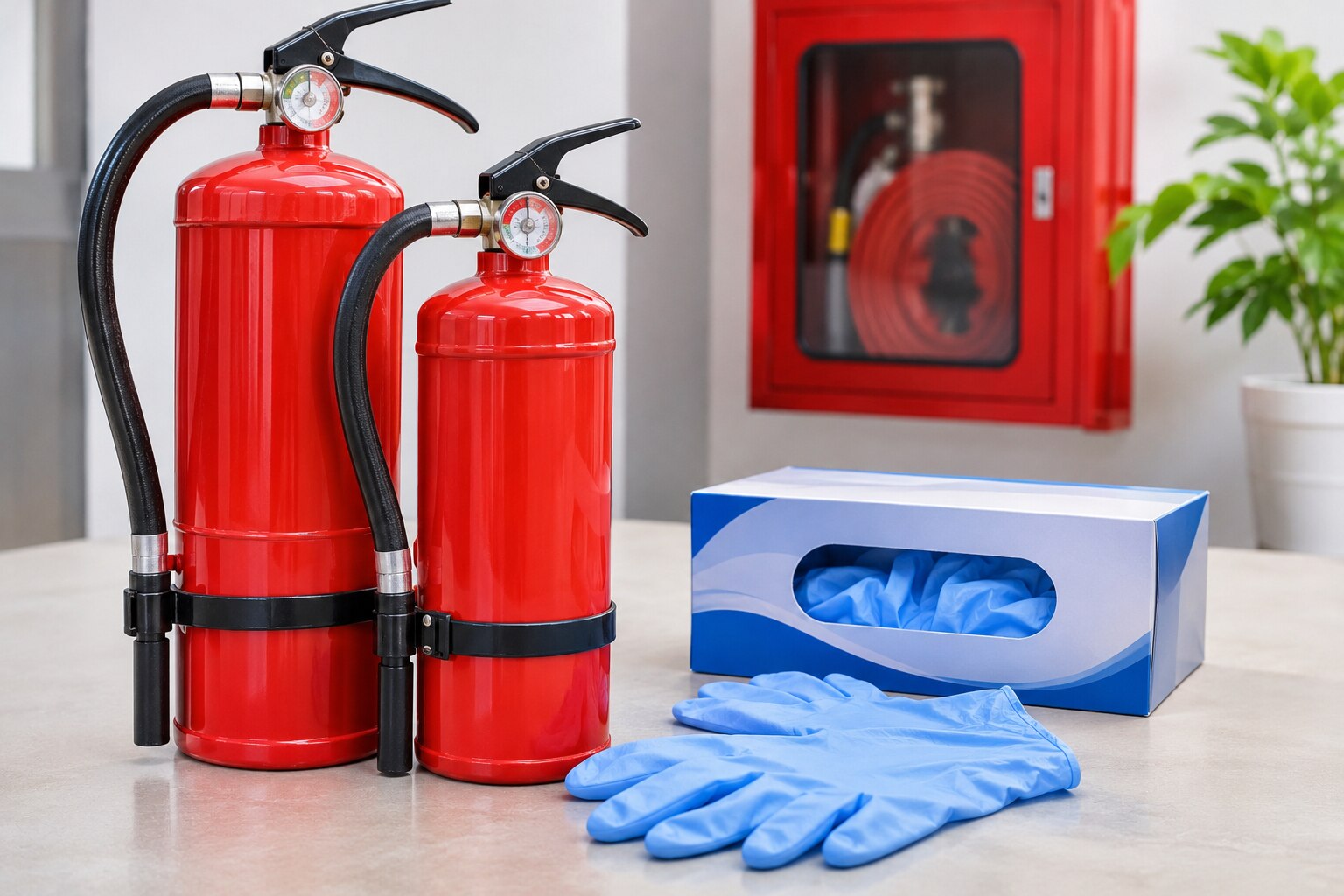
A factory fire can start while a worker is handling a contaminated part, leaking container or product residue. Fire extinguishers and disposable hand gloves in Nagpur address different exposures: one limits an incipient fire; the other limits contact with substances that can irritate, burn or contaminate skin.
| Control | Immediate job | What goes wrong without it |
|---|---|---|
| Fire extinguisher | Put out a small fire with an agent matched to its fuel | A worker faces flames, smoke and property damage before trained responders arrive |
| Disposable hand glove | Create a temporary barrier during a defined task | Skin contact, contamination and cross-transfer occur |
A glove cannot cool burning equipment or replace an alarm, escape route, hydrant or sprinkler. An extinguisher cannot protect hands from chemicals or residues. The fire extinguisher benefits in Nagpur depend on a risk-assessed system and correct fire rating, not on buying a cylinder by size alone.
Treat gloves as controlled single-use supplies, not general-purpose protection. Select the material, thickness, cuff, size and chemical barrier for the task; replace stretched, torn or contaminated gloves, and keep used pairs out of clean stock. Warm working conditions can trap sweat and worsen dermatitis, so schedule glove breaks and provide skin-care controls.
Choose reusable specialist gloves when puncture, heat or chemical breakthrough demands longer service life.
How to choose, place and maintain extinguishers in a Nagpur plant
A portable extinguisher is useful only when it matches the burning material, sits within reach, and leaves you a clear escape route.
Treat factory fire safety equipment in Nagpur as a risk-assessed system, not a row of identical cylinders: include alarms, detection, illuminated exits, hydrants, hose reels, sprinklers, spill control, first aid and trained fire wardens where the site requires them.
| Agent | Suitable hazard | Important limitation |
|---|---|---|
| Water | Paper, wood, cloth and other Class A materials | Never use on energised electrical equipment or flammable liquids |
| ABC dry chemical | Many Class A, B and electrical risks | Powder can damage machinery, contaminate products and impair electronics |
| Carbon dioxide | Energised electrical equipment and some flammable-liquid fires | Offers little protection against deep-seated Class A fire and disperses outdoors |
| Specialist metal-fire agent | Combustible metals such as magnesium or sodium | Ordinary ABC units are not a substitute |
Specify the fire rating, agent, operating instructions and compliance with the applicable edition of IS 2190:2010; do not buy by cylinder size alone. Position units on visible, unobstructed routes near hazards, but never where a worker must pass through flames to reach one.
- Inspect accessibility, pressure indication, pin, seal, hose, nozzle, corrosion and label condition on a documented schedule.
- Service, recharge or replace a unit after discharge, damage or an inspection failure.
- Train workers to raise the alarm, keep an exit behind them and fight only a small, incipient fire. Evacuate if smoke hides the exit, the fire grows rapidly, the fuel is unknown or retreat is unsafe.
These controls deliver the fire extinguisher benefits in Nagpur only when detection, evacuation and maintenance work together.
How to match disposable gloves to factory tasks
Material and specification must follow the task, not the label “disposable hand gloves for factories in nagpur.” Specify powder-free construction, size range, thickness, cuff length, acceptable pinhole level and barrier requirement. Nitrile offers better oil resistance and tear performance than vinyl; latex fits well but presents natural-rubber allergy concerns.
Polyethylene suits brief, low-contact handling, not precision work.
| Task | Suitable disposable choice | When to upgrade |
|---|---|---|
| Assembly and inspection | Powder-free nitrile, close-fitting, thin-to-medium thickness | Use cut-resistant reusable gloves for sharp edges, blades or abrasion |
| Machining and oil wiping | Nitrile with a longer cuff for light oil contact | Use cut-, puncture- or heat-resistant gloves around swarf, rotating parts or coolant exposure |
| Chemical handling | Material selected from the Safety Data Sheet, with permeation and breakthrough-time data | Use specialist chemical gloves when exposure is concentrated, prolonged or solvent-based |
| Cleaning | Powder-free nitrile with a long cuff | Use chemical-rated reusable gloves for disinfectants, caustics, acids or extended wet work |
| Food processing | Powder-free nitrile or vinyl approved for the intended food contact | Follow the food-contact specification; change gloves after contamination |
| Waste handling | Thicker nitrile for low-contamination waste | Use puncture-resistant or specialist gloves for sharps, biological waste or unknown chemicals |
A nitrile glove is not a universal chemical rating, and an intact-looking glove can already be permeated. In Nagpur’s warm conditions, rotate tasks, allow glove breaks and control sweat to reduce dermatitis.
Buying fire extinguishers and disposable hand gloves in Nagpur requires the same discipline: match each item to a documented hazard, not a catalogue description.
How workers should use, change and dispose of gloves
Change gloves between incompatible tasks, not only when they look dirty. A contaminated glove can transfer residue to shared surfaces, tools and products, while a torn glove can expose skin without warning. Wash and dry your hands before putting gloves on and after removing them; gloves do not replace hand hygiene.
- Issue task-based stock in multiple sizes. Keep clean gloves in a dry, designated area, separate from used gloves and chemicals.
- Check each glove before use. Change it immediately after a tear, puncture, visible contamination or chemical splash.
- Never wash, disinfect or reuse a single-use glove. Remove it without touching the contaminated outside, then place it in the waste stream specified for that contaminant.
- Change gloves before moving from dirty work to product handling, inspection or controls. Do not touch phones, handles or panels with contaminated gloves.
- In Nagpur’s warm conditions, schedule glove breaks for long tasks. Use suitable lining or an alternative material, and provide skin-care controls if sweat or occlusion causes irritation.
Buying disposable hand gloves for factories in Nagpur is not enough. For chemicals, match the exact glove material to the safety data sheet, permeation data and breakthrough time; nitrile is not universal protection.
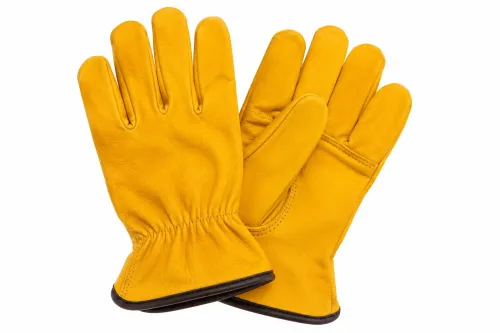
Choose a reusable or specialist glove for cutting, abrasion, heat, sharp edges, extended wear or heavy chemical exposure. Inspect, clean and store reusable gloves under a defined service-life procedure, and replace them when damage or contamination cannot be removed.
The factory purchasing checklist for a reliable safety programme
A low price does not make a safety programme reliable. Before buying factory fire safety equipment in Nagpur, require a site risk assessment, a written equipment schedule and records showing who will inspect, service, train and replace each item.
1. Match every extinguisher to the fuel: ordinary combustibles, flammable liquids, energised electrical equipment or combustible metals. Specify the fire rating and compliance with IS 2190:2010, not just cylinder size or agent name.
2. Check the wider system: detection and alarms, illuminated escape paths, emergency power, hydrants, hose reels, sprinklers, spill control, first-aid supplies and trained fire wardens. An extinguisher cannot correct a blocked exit or a missing alarm.
3. Ask for a commissioning plan showing locations, mounting, inspection frequency, service tags and replacement parts. Training must cover raising the alarm, keeping an exit behind you and abandoning the attempt when smoke, rapid growth or an unknown fuel removes that retreat.
4. Specify disposable hand gloves for factories in Nagpur by material, thickness, cuff length, size range, powder-free status, pinhole limit and required barrier performance. Choose nitrile, latex, vinyl or polyethylene for the task; do not accept “industrial glove” as a specification.
5. Set stock levels by task and size, separate clean gloves from chemicals and used PPE, prohibit reuse and define contaminant-specific waste disposal.
6. Include sweat and dermatitis controls for Nagpur’s warm conditions: glove breaks, skin care and suitable lining or alternatives.
Rahul Trading can help compare equipment against this written schedule, while your factory retains responsibility for risk assessment and worker training.
Related product
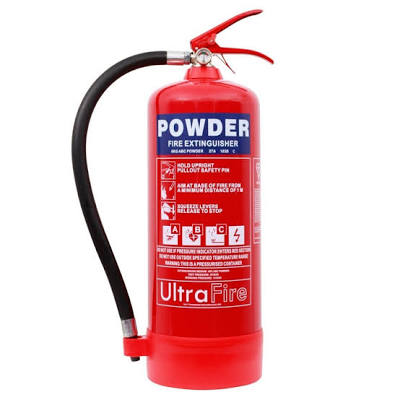 | Fire Extinguishers Type Fire Extinguishers Capacity 4 Kg Fire Class Class A Material Mild Steel Usage/Application Fire Fighting Country of Origin Made in India 4kg Dry... View product → |
Frequently asked questions
Why does a factory need both fire extinguishers and disposable hand gloves?
Extinguishers control incipient fires, while disposable gloves reduce skin contact with contaminated parts, leaking containers, residues and irritating substances.
How should a factory choose and place fire extinguishers?
Choose the extinguisher class for the fuel present, including ordinary combustibles, flammable liquids, electrical equipment or cooking oils. Place units where workers can reach them quickly, keep access clear and mount them securely with inspection tags visible.
How should factories match disposable gloves to different tasks?
Check the glove material, thickness, cuff length and chemical-resistance information against the task. Use gloves designed for the specific chemical, sharp-edge, contamination or heat exposure rather than choosing by colour alone.
When should workers change and dispose of disposable gloves?
Change gloves when they tear, become contaminated, develop leaks or workers move between incompatible tasks. Remove them without touching the contaminated outer surface and place them in the waste stream specified for that contamination.
What should a factory purchasing checklist include?
Record extinguisher type, capacity, location, inspection status and servicing dates. For gloves, record material, size range, task suitability, packaging integrity, batch information and disposal requirements.
Keywords